The process leading up to the final drafts of our personal essay project was very experimental. Each step, from generating the ideas for the essays, to incorporating literary tools in our writing, to video and media production, and even to sharing with audiences, was an experiment.
First of all, the way in which we chose topics about which to write was very creative. Dr. Burton read a list of different topics or experiences, and if something interested us, we were supposed to begin generating raw material about that topic. We then wrote multiple blog posts to narrow down the topics of our essays. The elimination process depended highly upon our taking in account of other people's comments about what what they found most interesting. That was experimental in itself in that we had to find ways to collaborate with classmates to review, edit, and share our material. As the essay topics were narrowed down, we began experimenting with different forms of Mormon personal essays. We studied examples of personal essays written by several authors, like Edward Geary, "Disorder and Early Joy", Tessa Santiago, "Take, Eat", and Gideon Burton, "In an Open Field, Near a Gravel Pit". We then analyzed ways to include Mormon Humor from Personal essays like DeNae Handy’s, "Falling for You.", and we even experimente with how to make our writing more like poetry.
Secondly, whilst actually writing our essays, we experimented with different ways of incorporating imagery, description, figurative language, and the inclusion of the Book of Mormon aspect in our writing. As a result of several differnt writing stages, we concluded that it was most effective to establish respect with the reader by building up our credibililty through the application of literary tools in our writing, and then bringing in the Book of Mormon content.
Lastly, we experimented with different ways of sharing the content of our essays. This included experimentation with video production, as well as selecting audiences or individuals with whom to share our material through social media and offline interaction. The video production included each member of the class developing their own minute-long video to advertise their essay with their own preferences to background, content, and inclusion of the Book of Mormon, as well as whose essay we talked about. Our initial videos helped us to determine what the effective aspects were. As a result of this experiment, and differences in aspects like sound and lighting, the final draft of our videos was much more uniform in the above-mentioned components.
Showing posts with label posted by Eliza B. Show all posts
Showing posts with label posted by Eliza B. Show all posts
Wednesday, December 17, 2014

Monday, December 15, 2014
Implementing the Sharing Plan (Updated)
While putting my sharing plan into action, I thought of different people to share with and decided on sharing different essays than I originally intended. It has been cool to relate the messages of other's essays with the experiences and personalities of my friends and family. And I have been encouraged by the positive reactions I have gotten so far.
Like Clark, I started by sharing, face-to-face, with someone who I am very comfortable with. I shared Mary's video with my roommate Rachel and in our conversation afterwards, I was surprised by how much I learned about her. She told me about kids she worked with that influenced her and showed me pictures. She was very animated and she was very willing she was to accept my invitation to read Mary's essay and check out more of the blog.
Also, I was able to share Emily's essay with my little sister, who has experienced similar setbacks in trying out for theater productions. I emailed her the link to her essay and then we talked on the phone about it later. She liked how Emily used Nephi in her essay and the Einstein quote. She also wanted to hear my essay so I read it to her over the phone. It was interesting how our perceptions of the same events were different. It was nice to spend some time talking to her.
I was able to share my essay with my Dad and talk with him on the phone about it for over an hour. He liked it a lot and we were able to have a good conversation on the importance of family. It became a kind of teaching experience for me; we talked a lot about what church leaders have said about families and the decline of the family unit in much of society today.
I have been Facebook messaging an old Sunday School teacher, and I was able to talk more with her and learn what she has been up to. I sent her my video through that medium. She has not yet responded but I think she will like hearing more about my family and my incorporation of the Book of Mormon.
I also emailed my essay to my non-member best friend Devin, who is currently going to school in Virginia. We edited each others essay throughout high school and we still edit back and forth. I emailed her my essay and asked about everything going on with her. She loved my essay and I invited her to read my brother's essay about his mission because I shared with her a little bit about Elijah's mission before. I also sent her the mormon message "He is the gift." We plan to meet up over break and I might follow-up a bit more then. It was a great opportunity to catch up and increase familiarity with the Church.
I shared my brother's essay with a friend in my ward that is leaving for a mission in a few months. She really liked the part of his essay I shared with her and wanted me to send it to her. I was able to talk to her about her mission and learn more about her.
Like Clark, I started by sharing, face-to-face, with someone who I am very comfortable with. I shared Mary's video with my roommate Rachel and in our conversation afterwards, I was surprised by how much I learned about her. She told me about kids she worked with that influenced her and showed me pictures. She was very animated and she was very willing she was to accept my invitation to read Mary's essay and check out more of the blog.
Also, I was able to share Emily's essay with my little sister, who has experienced similar setbacks in trying out for theater productions. I emailed her the link to her essay and then we talked on the phone about it later. She liked how Emily used Nephi in her essay and the Einstein quote. She also wanted to hear my essay so I read it to her over the phone. It was interesting how our perceptions of the same events were different. It was nice to spend some time talking to her.
I was able to share my essay with my Dad and talk with him on the phone about it for over an hour. He liked it a lot and we were able to have a good conversation on the importance of family. It became a kind of teaching experience for me; we talked a lot about what church leaders have said about families and the decline of the family unit in much of society today.
I have been Facebook messaging an old Sunday School teacher, and I was able to talk more with her and learn what she has been up to. I sent her my video through that medium. She has not yet responded but I think she will like hearing more about my family and my incorporation of the Book of Mormon.
I also emailed my essay to my non-member best friend Devin, who is currently going to school in Virginia. We edited each others essay throughout high school and we still edit back and forth. I emailed her my essay and asked about everything going on with her. She loved my essay and I invited her to read my brother's essay about his mission because I shared with her a little bit about Elijah's mission before. I also sent her the mormon message "He is the gift." We plan to meet up over break and I might follow-up a bit more then. It was a great opportunity to catch up and increase familiarity with the Church.
I shared my brother's essay with a friend in my ward that is leaving for a mission in a few months. She really liked the part of his essay I shared with her and wanted me to send it to her. I was able to talk to her about her mission and learn more about her.
Thursday, December 11, 2014
Finding the Sweet Amongst the Bitter
Friday, December 5, 2014
Strategy for Sharing Personal Essays
11.My best
friend from home, Devin. We always edit each other’s essays and I recently
spent some time this week giving her feedback on a paper. I am sure she would
like to read my essay and would have good comments, especially on the Book of
Mormon aspect, as she is a non-member. Also, I haven’t called her very recently
so it would also be a good opportunity to catch up.
22. My Dad. I
like to talk about ideas and assignments with him because he always has good
insights and advice. I think he would like to read my essay and have a
conversation, on Skype or over the phone, about it.
33.My roommate
Rachel. She is very supportive and I am sure she would be willing to have me
read it to her. I also think it would be useful to share it in person to be
able to gage interest level on this newest draft as I’m reading and have an
open conversation.
44.My friend
Laura. I haven’t talked with her for a few months and I think this would be a
cool way to reconnect with her. I will probably share this with her over email,
and maybe call her. She also has a bigger family, so I think she will be able
to relate to the topic of my essay and it could be a missionary experience as
she is a non-member.
55.My little
sister Mary. It would be a good way to strengthen our relationship. It haven’t
been able to spend much time with her lately since we live so far apart, and I
think this would be a way to get in touch and have a good conversation. I bet she would be willing to watch some of the video intros as well.
66.Erin, one of
my ward members. I think she could really relate to my essay because she is
from a similar family background. She is frank and direct and I think she would
share about her own similar experiences and have interesting things to say
about my essay.
Tuesday, December 2, 2014
Fiction as an Outlet for Authenticity
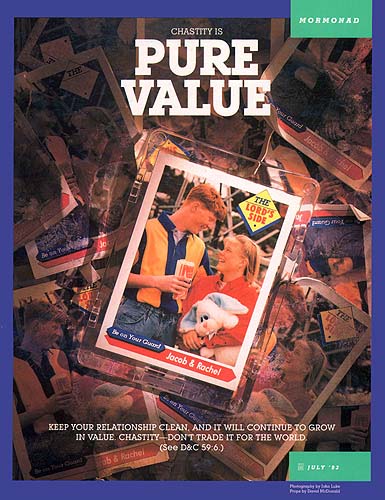 Fiction
allows true aspects of LDS experience to be depicted in a light-hearted,
humorous way that could be more difficult to accomplish in non-fiction. This is
seen repeatedly in Doug Thayer’s novel: Will
Wonders Never Cease. The principle of chastity is a big focus of many youth
lessons and talks by leaders of the LDS church. This is conveyed in the novel
through Lucille’s determined and constant efforts to teach Kyle, and other
youth, sex-ed. She holds ward sex-ed meetings, she makes Kyle look up sexual words
in the dictionary and discuss them with her and when she attends the 6th
grade sex talk with him, she finds it to be woefully uninformative. This
preoccupation with chastity is ingrained in Mormon culture and depicted in a
somewhat humorous, exaggerated way in Thayer’s novel. It illustrates an
authentic part of Mormon beliefs and youth life, while also making such a
serious, heavy topic more approachable. And although it pokes some fun at this
overzealousness, Kyle is also seen as a little grateful for this education
because he doesn’t have the same confusion as his friends.
Fiction
allows true aspects of LDS experience to be depicted in a light-hearted,
humorous way that could be more difficult to accomplish in non-fiction. This is
seen repeatedly in Doug Thayer’s novel: Will
Wonders Never Cease. The principle of chastity is a big focus of many youth
lessons and talks by leaders of the LDS church. This is conveyed in the novel
through Lucille’s determined and constant efforts to teach Kyle, and other
youth, sex-ed. She holds ward sex-ed meetings, she makes Kyle look up sexual words
in the dictionary and discuss them with her and when she attends the 6th
grade sex talk with him, she finds it to be woefully uninformative. This
preoccupation with chastity is ingrained in Mormon culture and depicted in a
somewhat humorous, exaggerated way in Thayer’s novel. It illustrates an
authentic part of Mormon beliefs and youth life, while also making such a
serious, heavy topic more approachable. And although it pokes some fun at this
overzealousness, Kyle is also seen as a little grateful for this education
because he doesn’t have the same confusion as his friends.
In
the non-fiction genre, writers have to stick closely to the facts of a
situation and leave out exaggerations. Additionally, in non-fiction writing
such as a personal essay, writers may find it difficult to include personal
flaws or the less flattering aspects of the church. The same perceptions that
would be relatable and funny from fictional character may come across as
deprecating or critical when expressed by a faithful member of the church,
especially to a non-member audience. Also, personal essay writers may not want
to offend those close to them by disclosing their unfiltered perceptions and
judgments. Kyle, on the other hand, is allowed to share his unfiltered thoughts
and comment on his mother, father, brothers and friends without fear of giving
offence because he is a fictional character, not a real person consciously
sharing a life experience.
Sunday, November 23, 2014
Personal Essay Video
I created a video describing my own personal essay and I did incorporate an aspect of the Book of Mormon. I found this assignment difficult as I dislike filming myself. Also, I am not sure if this generates interest about my essay or just summarizes in a less meaningful way my essay's message. Anyway, here is the link: http://youtu.be/iMPunTTKSFk .
Tuesday, November 18, 2014
Family Backgrounds
I
read my personal essay to my roommate Paige. This process, as well as the input
of classmates, gave me many helpful ideas of how to revise my draft.
Listening
to my essay, I noticed some tense errors, as well as some other grammatical
mistakes and repetition. I also found myself adding words to emphasize the
effect of certain phrases and even to preface one event. I wrote in many changes
that will help my essay be less redundant and more interesting.
Paige’s
response to my essay helped me figure out what I should expand upon and
emphasize with more imagery and descriptive language. For example, she laughed
at the description of my siblings at the airport, but seemed to be less engaged
during my description of my family at home. Through this, I realized that I had
included much more colorful, detailed characterizations in the former than the
later. I was also able to get feedback that my transitions were not confusing
and this helped clear up some of my concerns about my writing.
Also,
I had to explain the Book of Mormon component of my essay to her because it was
a quote that does not seem explicitly scriptural until you see the citation. This
made me reconsider expanding this aspect of my essay and adding more analysis.

Thursday, November 13, 2014
Recognizing Spiritual Comets in James Best's "Wayne"
In his poem “Wayne”, James Best develops the character of quirky, delusional Wayne through his interaction with his social worker. I found the descriptions of Wayne compelling because of his unique point-of-view and the authenticity of Best’s writing.
The poem starts with the imagery of Wayne painting the roof, his “hot metal canvas” with black paint against the white with such messages as “Spy planes, your rape the Heavens!” and “End Imminent—Retreat to Space.” The image of a man laboriously painting his metal roof in the heat of the sun combined with the detail of his slogans in an engaging introduction that piques the interest. Best continues to combine arresting and genuine detail with imagery throughout, such as when Wayne “spends four days drawing 600 pages/ of ambulances” and becomes “so happy he has to hug himself/ to hold himself in.” He is seen as a little crazy, and then as a child in an adult’s body. It is a fascinating look into the psychology of the mentally unstable; protected and removed as you are from the alarming aspects of the scene, peering in through the words and lines of the poem.
Mormons are constantly reminded to have charity for all, to serve and love even (especially) those that are not looked highly upon by most of society. But there is often a difference between believing something and actually practicing it. You may nod your head in sacrament meeting, and then pass by the dirty, tired-looking man on the street. This poem forces you to confront the often-unseen fellow children of God and remember that He loves them just as completely. Wayne is mentally dysfunctional and possesses many kooky ideas, such as his belief that the government shoots down comets, which “are just whales/ drifting through a different ocean.” Yet the command to love your neighbor applies just as fully to individuals like Wayne as the high-functioning lawyer in the next pew.
 As I read, I started to evaluate my own treatment of those that appear a little weird, not wholly together. Do I shy away from these sorts of interactions? Do I look at them with less respect, with a little revulsion? My attitude has certainly not been without fault. On my second reading of “Wayne,” I noticed the repetition of the idea of comets in the final lines. Looking up into the “clear night” sky, Wayne shouts in excitement:
“They’ll never shoot them down again!”
“I speak to the comets now!”
Though I first dismissed this as simply another of his crackpot theories, Best’s repetition clearly signaled its importance in the poem. I saw it as a call. Those like Wayne perceive the world in a completely different way, they are like whales swimming in a different ocean. Instead of trying to “shoot them down” with hard-hearted judgment and unkindness, I should strive to develop empathy and compassion. A disheveled exterior may conceal a spirit, bright and shining like a comet, within.
Friday, November 7, 2014
Midwestern Wilderness (Personal Essay Draft 2)
In my revised essay, I wrote about a different experience, as I received the feedback that my previous topic was somewhat cliche. Also, I tried to use with a more comprehensible and clear form in my writing to minimize any confusion on the part of the reader. I also tried to incorporate the Book of Mormon by likening my own experience to that of its characters. I strove to include concrete detail and to fully characterize the people described in my essay.
Tuesday, November 4, 2014
The Perfume Collection
 Dust
motes float softly in the golden light that filters down from windows cut high
in the vaulted ceiling. I rest my fingers gently on the outside of the display
cabinet; where they leave dull, opaque smudges on the polished glass. Head
slightly bowed and body still, I gaze at the shelves of delicate perfume bottles,
resting without particular organization or form. One, shell pink with gently
curving sides and a butterfly top, resides beside a bottle the deep blue of a
calm lake and geometric, multi-faceted sides that spin light in every
direction. Square, round, spiky bottles all fine, all settled in lovely repose;
richly appareled queens with downcast eyes, demure in their splendor.
Dust
motes float softly in the golden light that filters down from windows cut high
in the vaulted ceiling. I rest my fingers gently on the outside of the display
cabinet; where they leave dull, opaque smudges on the polished glass. Head
slightly bowed and body still, I gaze at the shelves of delicate perfume bottles,
resting without particular organization or form. One, shell pink with gently
curving sides and a butterfly top, resides beside a bottle the deep blue of a
calm lake and geometric, multi-faceted sides that spin light in every
direction. Square, round, spiky bottles all fine, all settled in lovely repose;
richly appareled queens with downcast eyes, demure in their splendor.
I
slowly reach one trembling hand into the cabinet and withdraw a teardrop shaped
bottle the dusky gold of the sky surrounding the setting sun. I take off the
cap and inhale the smell that is enshrined in the remaining few drops. The
scent eases my eyes closed and curls through my mind, teasing memories to the
surface.
The sharp smell of disinfectant slices through the air,
assaulting me as I step through the door of the house that is no longer my
grandparents. The house has been scrubbed clean—not only of any dust or mess,
but of the pictures of each family member on the bland white walls, of the
cabinet of VHS cassettes containing Mary Kate and Ashley movies my sisters and
I loved, of the Barbie doll with the crocheted wedding dress, of the apples
decorating every available surface of the kitchen, of the constant supply of popsicles
in the freezer. I breathe in the emptiness of the house and feel it saturate my
emotions.
“You know, this is probably the last time we’ll ever come
here” my cousin observes, deceptively calm and detached. She is still wearing
her bright green dress from the funeral, hands shoved deep in her pockets. I
nod placidly, trying to commit every detail to memory as we walk through each
room in the small house. We walk in silence outside, shutting the white,
wrought iron screen door with a solid clunk. The verdant grass, a vivid green,
is soft and thick under our feet. I stoop down one last time, running my
fingers through its supple strands. As I climb into the car, I stare at the
closed door of their house and wonder who will take care of the grass.
I place the bottle back in the cabinet and withdraw a
clear, simple square bottle.
Fresh air, crisp and sweet, breezes in through the open
doors of my grandparent’s home. Sunlight streams through gauzy white curtains
and fills the space. My grandma leans against the kitchen counter, while my
brother and I sit on sturdy wooden stools trying to count all the apples—seen
in the wallpaper, clock, fruit bowl and wall hangings—decorating the kitchen.
Her eyes twinkle behind her glasses and her small hands,
spotted by age and traversed by puffy blue veins rest on the counter. She wears
navy slacks and a collared, striped shirt that is slightly too big for her thin
frame. Elijah and I are at fifty when a sleek brown cat appears at the garage
door.
We
watch in surprise as he sprints downstairs and back upstairs and jumps on the
coaches and back out the front door. We laugh and resume counting, when the cat
rushes through the door again. This time, I leap off the floor and chase it
down the stairs, over the couches and behind the bed. He swerves around the
basement spastically and then back up the stairs and through the door. We
barely sit back down when the cat reappears, and this time Elijah joins in the
pursuit with me. He and I follow the cat closely with a paper bag between us.
And the cat’s crescent black eyes narrow with the promise of challenge and we
face off across the basement floor. He weaves, we bob, following him like a
shadow. But we are no match for ninja-like reflexes and he escapes past us up
the stairs. He leaps onto the counter-top of the kitchen and begins to savor
his victory by eating the Cheetos in a bowl. This is too cruel a blow for even
Grandma’s long-suffering nature, and she too becomes embroiled in the rivalry,
shouting, “You dang cat! Those ain’t your Cheetos! You get off my countertop!”
and moving to shoo the cat out. Elijah and I collapse in giggles.
Grandma
is forced to enlist a higher power: Grandpa, who successfully rids us of the
scourge accompanied by cheers and praise. We celebrate the triumph on the front
lawn in the bright mid-day sun with popsicles. I wipe away the red residue of
the strawberry slush from my mouth and cartwheel, hands over feet again and
again in the cool grass.
I return the perfume bottle with a smile, reaching for a
petite, rosy-tinted bottle with facets that reflects light.
As soon as the car stops, I push open the door and leap
out of the car and up the front step to the door. My little brother rings the
doorbell again and again in excitement as I trace the curling metal of the door
with my hand. My Grandma opens the door and her expression of pure delight at
seeing us is made more beautiful by the pinkish morning light. She envelops me
in a warm hug; I smell her delicate floral perfume that is inextricably
associated with my time in her home.
My parents and Grandpa gather on the cushy leather
couches with my siblings, and I gather in the kitchen. The sizzle of bacon on
the grill and the sweet, floury smell of pancakes baking supplies a pleasant
background, as we jostle against each other for the spinning bar tools and
compete against each other for Grandma’s attention. Sitting in my grandparent’s
kitchen, surrounded by my loud family and the ghosts of good memories, I am
completely content.
I
love my grandparents. My time in their home was idyllic, pure, innocent, safe,
beautiful. Their house remains, but it is filled with the pictures of another
family. Perhaps the kitchen is decorated with pears instead of apples and the
grass is thin and straw-like instead of thick and moist. When they left, their
home became simply a house. And it was empty. I look forward with “a perfect
brightness of hope” to the day when I, after “press[ing] forward” with
“steadfastness” against obstacles as small as swaggering cats or so big as too
seem insurmountable, will visit my grandparents in their heavenly home (2 Nephi
31:20).
I
put the final bottle back, and in the brightest point of the display case I clear
a spot.
Subscribe to:
Posts (Atom)