Showing posts with label posted by Andrew O. Show all posts

Wednesday, December 17, 2014

My Sharing Plan in Action

I was able to contact two of my good high school friends and share my personal essay and personal essay video with them.  One of them has already gotten back to me, but the other won't until later.

In order to share with these two friends, I simply messaged them on Facebook and asked them if they would check out my personal essay and personal essay video to help me out for a class.  I explained that we were trying to find ways to share our beliefs with those not of our faith, and, since they both knew me fairly well in high school, they were open to help me out.  I have since had a good discussion with the one who got back to me, and it was a really successful way to share my beliefs with him in a way that wasn't preachy or pushy or weird.

I really liked the approach I took because it was very casual and it didn't come off as if I was trying to throw my religion in their faces.  I think having assignments like this helps because, when something is due for a class, it makes it seem like it isn't just another proselyting effort.  However, because of the content, it should at least get those who check it out to be interested and hopefully want to learn more somewhere down the road.

I would also suggest being honest about the fact that this is actually about trying to share our faith.  If we don't mention that and then all of a sudden our religion pops up, it can seem very deceiving and maybe even annoying.  I wouldn't like it if that happened to me, because I would feel like the person sharing with me was trying to shove his/her religion in my face by tricking me.

Report Draft: G - Initial Responses

In getting initial responses, it seems like not many people posted their personal essays publicly on social media. Because of this, we don't have many examples of casual responses (likes on Facebook, etc.). We did have a few people get likes on Instagram and Facebook though.

However, we did get a lot of personal interaction responses. Jeremy and Andrew both had similar experiences sharing with their friends. After good responses from their friends, both Jeremy and Andrew plan to talk to their friends further about their personal essays over Christmas break.

Tori, however, didn't have such luck. Tori tried to contact a friend through Facebook, but her friend was unresponsive. Without other contact information, Tori is still awaiting a reply. This is an example of how social media may have not been the most effective sharing method.

Scott sent a personal message to a friend who he had not spoken with for over four years. In the conversation he had with this friend, they reconnected and talked about getting lunch sometime with their childhood crew. Scott was glad that he shared his essay, since this gave him a reason to contact him.

Ryan Parker was able to connect with an old mission companion about a tough experience they both shared. They were able to understand each other better, and this helped them to relate more. However, Ryan's old mission companion asked him to not share the essay publicly on social media since it was so personal. Some essays may not be suitable for public exposure online.

Elijah had a good experience talking on the phone with a friend about his personal essay. Elijah noted that it was natural and personal to reconnect over the phone. These personal essays can be a good way to start conversations and renew old friendships.

Ryan W shared an essay by Viridiana with a member from Argentina who said he would share the essay with at least 5 people he knows well. This shows the great missionary opportunity that can come from such personal, natural essays that share our beliefs.

Wednesday, December 10, 2014

The Power of Music

Do you think it's possible to find peace through soft AND intense music?  When I think about my first semester of college, I know this is possible.


Friday, December 5, 2014

Action Plan for Sharing My Personal Essay

1.  Dylan Teague.  Dylan is my best friend from high school, and we still talk occasionally.  He is married and has a son.  I’ve shared the Gospel with him before, but he hasn’t been baptized.  He’s still open to hearing about my religion, and he respects me and the beliefs I have.  I’m going home for Christmas this year, and I’ve already talked to Dylan about spending time with him at his house.  I would like to share my personal essay with him in person, and I’d like to talk more in depth about it than we have before.  I think that would open some doors to being able to share more of the Gospel with him without pushing my beliefs on him, and without being too preachy or weird about it.

2.  Antoni Hernandez.  Antoni is a kid from my mission who I connected with really well.  He has lots of hardships in his life because of poor parenting, but luckily he is currently living with a less-active we reactivated and his wife and kids who we baptized.  I spoke with him recently and he said he just received the Aaronic priesthood and is attending church.  I think my personal essay would really help him see how the Gospel can help all of us make it through our trials.  I’ll try to contact him through Facebook.

3.  Ana Carola Chura.  Ana is a convert from my mission who I had the privilege of teaching leading up to her baptism.  She is an incredible young woman who wanted to be baptized basically since she and the husband of her cousin (she lived with them in the U.S. for a while before moving back to Bolivia) received the lessons from the missionaries.  I would like to share my personal essay with her because her family back in Bolivia is a non-member family, and she has already shared the Gospel with them before.  I’d like to see if my personal essay could be something Ana could use to share the Gospel with her family.  I’ll try to contact Ana through Facebook as well.

4.  Brandon Johnson.  Brandon is a good friend from high school.  He and Dylan Teague also know each other.  Brandon would often work out in the weight room with me after school during the weekdays back when we were in high school.  Brandon told his parents, who then told my parents, that he really agreed with a lot of the things I would say.  Brandon’s parents told my parents to thank me for being a good friend to Brandon.  Brandon also messaged me on Facebook while I was on my mission, mentioning that he missed playing video games together and stuff like that.  I think we have a good enough connection that I could get him to read my personal essay.  I think my personal essay wouldn’t be overbearing or too churchy, and yet at the same time it could get him interested in the Gospel and the church.  I’ll see if I can see him over the Christmas break while I’m home, but most likely I’ll be able to contact him only through Facebook, at least initially.

5.  Tamara and Ronald Thompson.  Tamara is my sister.  She married outside of the church, but her husband Ronald was baptized a little over a year ago.  I think sharing my personal essay with Tamara would be a good way to have Ronald read it (or have it read to him J) and to hopefully encourage him to stay faithful to the church.  Even though Ronald was baptized, he has struggled to stay active.  He and Tamara had the goal of getting sealed in the temple, but that goal has been postponed.  I’d really like to help them out, and since I have such a good relationship with them already, I think they’d be up for reading my personal essay.  I’ll see them over the Christmas break, so I’ll share it with them then.


6.  Marlon and Karina Cruz.  Karina is a less-active we were able to reactivate while I was on my mission, and Marlon is her husband.  Karina’s oldest daughter was already a member, and we were able to reactivate her as well.  We were also able to baptize Marlon and their son, also named Marlon, followed a year later by the baptism of their youngest daughter (when she turned eight).  They are a great family and are still active in the church.  I’m hoping that sharing my personal essay with them would give them something to use to share the Gospel with their friends.  I’ll try to contact them through Facebook.

Monday, December 1, 2014

The Power of Honesty in Representing Cultural Experience

I believe that representing LDS experience through fiction is very valuable.  There are so many things that can be shared through the mind of a fictional character in a fictional setting and situation that can’t be shared (or can’t be shared very easily) through nonfiction.

For example, it is very difficult to represent the negative aspects of a culture through one’s own personal writing or speaking.  Often the negative things in life get pushed aside and those involved try to ignore them.  I believe this is alarming because I believe that many people could have a legitimate concern and yet be embarrassed to express their concern for fear of being too negative or being against the norm.  This could be bad, in my opinion, because this could mean that there are problems in society that are not addressed.

In Doug Thayer’s novel “Will Wonders Never Cease”, Thayer does an excellent job of being honest.  His main character and protagonist, Kyle, is a young teenager who has plenty of ideas about the world he lives in.  Some of these ideas are very negative.  However negative these ideas can be, however, I really enjoyed reading some of them.  I was able to relate with Kyle very well, since I have also had similar ideas and opinions in my life.  Thayer was able to address some very sticky issues that I don’t think he would have been able to address without using fictional writing.  Had he simply been writing or speaking some of these ideas or concerns from his own point of view, I think it would be very likely that he would be looked down on and his ideas would be rejected.


I for one connected very well with Thayer’s main protagonist Kyle, and I am a fan of being honest in fictional writing.

Sunday, November 23, 2014

Finding Peace Through Music

I chose to talk about the story from the Book of Mormon that I incorporated into my personal essay.  I tried to avoid mentioning the church or God specifically, however.  I just tried to talk about the story and how it was similar to my particular experience.  I hope I was able to talk about my experience without coming off as being too preachy.

Here's the link to my video:  http://youtu.be/H7CdwZRYRcY

Wednesday, November 19, 2014

Your Essay Sucks

I had the opportunity to talk with my best friend growing up about my personal essay.  He's not a member of the church, so I figured he would be a good candidate for getting genuine, valuable feedback on my essay.  He told me that he really wanted to talk to me on the phone rather than email me or text me his response to my essay.  I had let him know ahead of time the reason I wrote the personal essay (that I hoped to be able to share my faith well through my personal essay), so he had an idea of what to look for.


He let me know that he thought the essay sucked!  He said he wanted to speak with me on the phone because he didn't want to be offensive due to how impersonal a text or an email can be.  He let me know that he felt like I was just putting in a plug for the Book of Mormon that didn't tie in very well to my personal essay, something that I had been thinking all along.  I'm going to focus on tying in the Book of Mormon better into my personal essay.  He mentioned making the Book of Mormon section more personal by including how it helped me or something like that, rather than just simply relating a story that happened to be somewhat similar to my personal experience.  I felt like that was a very valuable insight that I'll try to incorporate into my revisions of my essay.

Aside from going over the my personal essay, we had a very good conversation and caught up a little bit on our lives.  Even though he's not a member of the church, he knows quite a bit about the church because of me and my family.  He is very willing to let me know how he thinks about things regarding the church, which is very valuable to me because it helps me see the church from an outsider's perspective.  This outsider's perspective helps me know how to share the gospel better with nonmembers.

All things considered, this conversation was very valuable because it a) has helped me to know how to get my personal essay to a point where a nonmember would be more likely to read it or pay any attention to it and b) has helped me have an opportunity to catch up with my friend and share my beliefs without being preachy or being awkwardly direct about my beliefs.

Friday, November 14, 2014

Love Floats Pale and White by Steven L. Peck and the Pity It Invokes.

I genuinely felt sad after reading this poem.  This is an odd occurrence for me because I usually absolutely hate poetry.  Maybe I shouldn’t say that, but I should probably just be honest J.
I think one of the main reasons I really liked this poem is because it’s written like a personal essay.  I would assume logically that he wouldn’t write about himself as a she or a her or going through a pregnancy.  Because of this, I’m assuming that this isn’t a personal essay from Steven, but rather it’s perhaps a personal essay that he wrote for someone else.  I could be wrong, but that’s my guess.

Anyway, I think Steven did a great job of capturing the emotion of the event.  Steven writes of a woman who has just woken up from an operation in the hospital.  Her family files in, and she is able to recognize all of her family members except her son.

The part of the poem that illustrates this is very captivating:
Fear turned into relief as her eyes and countenance recognized each face and she whispered their names:  her husband Jimmy, her oldest daughter Chandra and her husband Michel and their new baby Brittany, her three other girls, Becka, Tera, and Rachel, but who was this she asked, “Is this one of your friends Rachel”  She said to the shy young boy, “Mom it’s me,” said Kendel.

This part made me almost want to weep.  I have to admit that I had to read through the poem a second time to understand all that was going on, but it was really moving once I finally figured it out.


The poem definitely takes on a Mormon point of view after this point.  There is mention of her reading her journal to find that she knew that her son had chosen her to be his mother.  This maybe isn’t entirely a Mormon concept, but it definitely is a part of Mormon culture.  Also, the poem focuses on this woman and her wondering if she’ll ever get those memories back in the resurrection (the resurrection is mentioned specifically).  Steven definitely helps the reader see the point of view that a Mormon would have in a situation like this, and many of the thoughts that would be very common among Mormons as they go through trials such as these.

Friday, November 7, 2014

Cold Walks to Campus 2

(In this revision I was advised to focus more on the finding peace theme that I wanted to put into this essay.  Also, I was advised to focus my Book of Mormon story on an example of a character seeking peace.  These are the two things I tried to do when revising my personal essay.)

I can remember the cold walks up to campus when I attended BYU-Idaho.  Before going out each day, I would wake up early, at 7 in the morning, and get ready to go.  I was usually the first one of an apartment of six roommates to take a shower.  I particularly enjoyed being the first one in the shower since it meant that I would actually get hot water.  Cold showers always made it so tough to take a shower, and I would always get upset after trying to take one.  In contrast, I loved getting into a warm, steamy shower in the morning.  Warm showers helped me (and still help me) wake up, and it was a fantastic time to contemplate and think about life.  I often was able to find peace and consolation as I thought in the shower.  I was able to have a private time away from everyone and everything, a time to vent as I thought of the struggles I was going through.  To this day, I still do most of my thinking while showering.
While in the shower, and while eating breakfast, my mind would return to the usual experiences of my life at that time.  I would quickly remember the frustrations of trying to deal with my roommates.  They would do things that, at the time, were just so annoying.  For example, they would never clean ANYTHING.  I mean not one single thing.  I think that would definitely still annoy me to this day.  They even hid all of the dishes in THE CUPBOARDS so that the cleaning check lady wouldn’t see that the dishes hadn’t been done.  We had an extremely lenient cleaning lady who made the cleaning checks very easy.  She basically wouldn’t check anything, so there you go.  However, with roommates like mine, that meant that the apartment got really bad really quick.

After being reminded of that, I would also remember that my roommates weren’t very fond of me either.  It was bad enough that they weren’t really into the whole cleanliness concept, but of course that wasn’t the only concern.  I felt myself getting slightly depressed.  Why me?  Why did I have to deal with this trial?  I had only heard of all the amazing times that my brothers had had while attending BYU, so I thought that I would have a similar experience.  Sadly, that was not the case.  At this point, I desperately longed for peace.  I struggled trying to find the solutions to my problems, but I discovered a way to cope on those cold, lonely walks to campus.

However, despite my longing for such a great experience, I didn’t get the idea of true faith.  A man in the Book of Mormon illustrates the longing for peace and happiness that I was experiencing.  He went to the woods to pray, and he was able to find peace while being alone.  He exercised faith that God could help him, and afterwards he acted according to the peace he had felt.  This is something that I didn’t understand at the time, but I came to understand later.

After showering and finishing my cereal (which usually was something very sugary and unhealthy, which probably didn’t help any) I would put on my coat and get ready for the trek to my 9am precalculus class.  I can remember the bitter cold, and I can also remember knowing that I would probably be on campus all day, until late (usually around 9 at night).  This heavy workload had to do mostly with my computer science class that I was taking, the difficulty of which was amplified by the fact that I had never before done any coding whatsoever.  These thoughts added to my stress.  Again, I desperately longed for peace.

Often I would wonder how I was going to survive it all.  But then, as I would exit my apartment, I would put on my headphones (or rather my ear buds that also wrapped around the ear so as to stay on better), and I would immediately feel a rush of excitement.  The music that would flood into my ears and subsequently my mind was incredibly satisfying.

The most frequently listened to artist was Linkin Park.  I would listen to the intensity in some of their music, which seemed to be exactly how I was feeling.  The lyrics and music matched what I was thinking so often it was difficult to imagine that I hadn’t created the music myself.  In striking opposition to the intensity found in some of their songs, the softer tones of other Linkin Park songs would come on.  The lyrics and the music combined perfectly to help me calm down.  The lyrics in these softer songs would talk about letting things go, and about remembering a person for the good things about him or her and leaving out all of the bad things.  Their music could always help me relax and focus on what I needed to do for the day, putting aside the stressful things that seemed to relentlessly try to pull me down.  I finally had found that peace that helped me to make it through the tough times.  I know it might sound a little odd, considering the heavy nature of a good portion of Linkin Park’s music, but their music helped bring that peace that kept me going day to day.

I know my life isn’t guaranteed to be wonderful just because I learned from these experiences and was able to make it through them, but I know now that, with the help of God, I CAN make it through.  That’s enough for me.


Tuesday, November 4, 2014

Cold Walks to Campus

 I can remember the cold walks up to campus when I attended BYU-Idaho.  Before going out each day, I would wake up early, at 7 in the morning, and get ready to go.  I was usually the first one of an apartment of six roommates to take a shower.  I particularly enjoyed being the first one in the shower since it meant that I would actually get hot water.  Cold showers always made it so tough to take a shower, and I would always get upset after trying to take one.  In contrast, I loved getting into a warm, steamy shower in the morning.  Warm showers helped me (and still help me) wake up, and it was a fantastic time to contemplate and think about life.  I still do most of my thinking while showering.

While in the shower, and while eating breakfast, my mind would return to the usual experiences of my life at that time.  I would quickly remember the frustrations of trying to deal with my roommates.  They would do things that, at the time, were just so annoying.  For example, they would never clean ANYTHING.  I mean not one single thing.  I think that would definitely still annoy me to this day.  They even hid all of the dishes in THE CUPBOARDS so that the cleaning check lady wouldn’t see that the dishes hadn’t been done.  My good friend who was one of my roommates at the time wondered the entire semester where some of his dishes were.  At the end of the semester he found them; still dirty with food from months before.  We had an extremely lenient cleaning lady who made the cleaning checks very easy.  She basically wouldn’t check anything, so there you go.  However, with roommates like mine, that meant that the apartment got really bad really quick.

After being reminded of that, I would also remember that my roommates weren’t very fond of me either.  It was bad enough that they weren’t really into the whole cleanliness concept, but of course that wasn’t the only concern.  I felt myself getting slightly depressed.  Why me?  Why did I have to deal with this trial?  I had only heard of all the amazing times that my brothers had had while attending BYU, so I thought that I would have a similar experience.  Sadly, that was not the case.

However, despite my longing for such a great experience, I didn’t get the idea of true faith.  It was something I started to realize that semester, but I didn’t fully understand the concept until I served a mission for the Church of Jesus Christ of Latter-day Saints.  It was then that I learned that if we want something to happen in our lives, we can’t just pray and expect God to do it all for us.  We have to do our part, since, as the Apostle James teaches in the New Testament of the Bible (James 2:20), “…faith without works is dead.”  I also learned from the Book of Mormon (in Alma 32:28-43) that we must strive to constantly nourish our faith in order to keep it alive.
After showering and finishing my cereal (which usually was something very sugary and unhealthy, which probably didn’t help any) I would put on my coat and get ready for the trek to my 9am precalculus class.  I can remember the bitter cold, and I can also remember knowing that I would probably be on campus all day, until late (usually around 9 at night).  This heavy workload had to do mostly with my computer science class that I was taking, the difficulty of which was amplified by the fact that I had never before done any coding whatsoever.  These thoughts added to my stress.

Often I would wonder how I was going to survive it all.  But then, as I would exit my apartment, I would put on my headphones (or rather my ear buds that also wrapped around the ear so as to stay on better), and I would immediately feel a rush of excitement.  The music that would flood into my ears and subsequently my mind was incredibly satisfying.

The most frequently listened to artist was Linkin Park.  I would listen to the intensity in some of their music, which seemed to be exactly how I was feeling.  The lyrics and music matched what I was thinking so often it was difficult to think that I hadn’t created the music myself.  In striking opposition to the intensity found in some of their songs, the softer tones of other Linkin Park songs would come on.  The lyrics and the music combined perfectly to help me calm down.  The lyrics in these softer songs would talk about letting things go, and about remembering a person for the good things about him or her and leaving out all of the bad things.  Their music could always help me relax and focus on what I needed to do for the day, putting aside the stressful things that seemed to relentlessly try to pull me down.  I know my life isn’t guaranteed to be wonderful just because I learned from these experiences and was able to make it through them, but I know now that, with the help of God, I CAN make it through.  That’s enough for me.

Friday, October 24, 2014

How Struggles Have Shaped My Life for the Better

Inner Struggle
I can remember struggling to find motivation to get up some days.  The other missionaries would seem so happy, so driven with purpose.  Every morning waking up with the sun (which seemed so horribly early to me) just added to my stress.  I had never before experienced something so difficult.  I felt like I was standing in quicksand, sinking further and further every day.  I couldn’t understand the difficult companions I had to serve with, or why my mission president (or the Lord for that matter) decided to put them with me.  I can remember thinking “Is it me?  Am I the one causing all of these problems?”  I would keep my frustration to myself because of this thinking, because I was afraid that I was the root of the problems I was having, since I hadn’t experienced being with a companion I got along with yet.  I can remember waking up in a sweat in the mornings; I can also remember being pale with fear throughout each day.  I had never been so stressed in my life.  I felt like the world was crumbling in an earthquake and thunderstorm all around me, and yet everyone else seemed to be so obvious to the destruction that threatened to consume everything.

Scripture, Personal and Powerful
In James 2:17-26, I found some of the most influential verses of scripture in my life.  Honestly, these verses are some of the most profound, influential, and important advice I have ever received.  In these verses the Apostle James speaks of faith and works, and how the two go together.  In verse 17, it reads “Even so faith, if it hath not works, is dead, being alone.”  After reading this section, I felt like I truly understood faith for the first time.  Faith is not just simply believing in something (although that’s a very important part of it), but it’s also acting.  I learned, finally, that the reason that I was struggling in certain areas of my life and not getting help from God was because I wasn’t doing my part; I wasn’t acting.  I was simply praying and asking God to help me with everything, basically to do everything for me, without any effort on my part.  These verses had such a profound impact on me that I still think about them often, and I live my life by them now.  Things that I struggled with before can still be struggles sometimes, but I have been able to get through some of them and to persevere with my understanding of faith and how it combines with works.

A Wilderness Quest

I can remember the day I was asked by my brother to read the Book of Mormon.  It was a Mothers’ Day, and my brother was on his mission at the time.  He of course had the usual missionary phone call home, and he spoke with all of us together and individually.  I honestly don’t remember anything he spoke with me about except for when he encouraged me to read the Book of Mormon.  Up until that point I hadn’t really cared or thought about it.  I felt like I believed in the church just because and that was fine with me.  I didn’t really realize that I needed to know for myself if the church was true or not.  Whatever the case, I took my brother up on it.  I can still remember how much better the following school year was for me.  I felt like I was connecting with the Book of Mormon, and the counsel contained in it seemed like it was just for me.  As I am able to reflect on my life now (and I think I even realized this then), the Book of Mormon really saved my life, at least spiritually.  The previous school year I had been going downhill fast.  My life was not where I wanted it to be, and my time on the football team had been especially difficult.  I was really struggling.  The Book of Mormon helped me to understand my life and circumstances better, and it saved me from simply giving up or allowing myself to not care.  My relationships improved and my overall happiness increased.

Tuesday, October 21, 2014

What We Learn From Nephi's Preaching From the Tower

Example #1.  Note this example is paying attention to narrative point of view:

-     In Helaman 6:1-9, we learn of the inner thoughts of a man, which are centered on the way that his community is decaying or has already decayed.  We also learn of his feelings, which are very sober and worried because of this decaying of his community.  Then, the narrative shifts to this man's actual spoken words in verses 7-9.  Because of the previous narrative on his thoughts and feelings, we understand why he is saying what he is saying.

Example #2.  Note this example is paying attention to plot:

-     In Helaman 6, we learn more about a man who is trying his best to repair the damages in his broken community.  We see how this man is looked down on and attacked by his peers, who believe that everything is alright and that nothing needs to change.

Example #3.  Note this example is paying attention to character:

-     In Helaman 6, we learn of a good man trying to do his duty and yet suffering for it.  We also learn of this man’s struggles trying to help his community, and we see how these struggles shape his life and who he is.


I commented in Allyson J’s post titled “Homeless but Hopeful” and related some of what she posted to the Book of Mormon.

Saturday, October 18, 2014

Linkin Park's Influence for Good in my Life

Physical Experience
Smell of certain foods reminds me of my home in Laurens, IA

Seeing light come into a room through the window in a certain way also reminds me of my home in Iowa

Thunderstorms remind me of being terrified when I was young in Iowa due to the possibility of tornadoes

Hearing certain songs that I only listened to once or rarely at certain times in my life reminds me specifically of those times in my life

Getting hit or injured quickly reminds me of previous times that I’ve been injured and had a similar experience or feeling, like when I was in football

Scenes
Thunderstorms – Vivid memories of thundering sound, rain hitting the windows, strong winds slamming the house and the trees, causing the trees to swing violently back and forth, foreboding yellowish sky indicating possible tornadoes, wet, muddy ground making it hard to play outside right after the storms, hail making it scary to walk outside, checking for damage on cars that were left outside, searching for toys that were accidentally left outside that might have been blown away in the fierce winds, mom asking me if I know what to do if there actually is a tornado heading for us, where to go for protection

Speech
I remember listening to many messages regarding political issues and hearing the emotion in the speeches, the way the words were presented really drew me in and helped me feel like what they were saying was one hundred percent true

I remember personal experience or testimony being given regarding controversial political issues, often the emotional tone was combined with powerful and/or dramatic words or dialogue that added strongly to the message

I remember the powerful pregame speeches given by football coaches to boost the morale of the players and to get us all pumped up to go play as hard as we could and to do our best

Emotion in the moment
I remember around my first semester of college that Linkin Park, my favorite band, came out with their album “A Thousand Suns” that had some powerful music that helped me get through everything.  That music at that time and still to this day brings out strong emotions.  For example, I remember feeling anger or aggression listening to some songs, but then with other songs emotions of calm and peace are brought out, with lyrics that explain letting it go and moving on.

People of Consequence

Thinking of Linkin Park again, I can remember watching videos on YouTube of Linkin Park performing live.  Those lyrics and the music that Linkin Park created and performed, especially combined with the emotion and in the way that they performed their music, make me think of them and their music often when I recall certain past experiences and times in my life.  Even though I don’t know any of them personally (I only know them from having watched their videos online), I often remember them and think of them as friends or teachers or leaders in my mind because of the things I’ve learned from listening to their music.

Monday, October 6, 2014

The Logical and Confident Speech of Elder Jorg Klebingat


For my analysis of a General Conference talk (or speech) of the Church of Jesus Christ of Latter-day Saints, I decided to focus on the talk "Approaching the Throne of God with Confidence" given by Elder Jorg Klebingat, a member of one of the quorums of the Seventy.

I’m also going to compare the talk "Living According to the Words of the Prophets" given by Carol F. McConkie to Elder Klebingat’s talk.

Elder Klebingat stated after his brief introduction to his talk that he had six suggestions for the audience to help them avoid wasting time feeling unworthy or less in some way.  Elder Klebingat’s six suggestions made a ton of sense to me, and because of this they helped give him plenty of credibility.  Often, with a speaker who is new (especially a Seventy as in this case), it can be difficult to pay attention.  This can be for many reasons, but, whatever the case, Elder Klebingat avoided this by building up his logos early on and continuing to build it up throughout his talk.

After starting in these two ways, Elder Klebingat began to speak quickly (probably because of how little time he was given to speak) and confidently on his topic.  This is the part of Elder Klebingat’s talk that I would like to compare with Sister McConkie’s talk.

Elder Klebingat and Sister McConkie spoke confidently, grabbing the attention of the audience and keeping the attention throughout their talks.  Considering the calling of Elder Klebingat to be a leader over the young men of the church, and considering the calling of Sister McConkie to be a leader over the young women of the church, it makes sense that they would know how to speak confidently in order to grab the attention of the audience.  Working with young men and young women would definitely require this.

Also, neither one employed a fake voice, which can make the whole talk seem fake.  They both knew what they wanted to say, and they said it confidently, letting the whole audience know that they meant it with all their hearts.  This really helps grab the audience’s attention and keep it throughout the talk or speech, and often people prefer this approach because they can pay attention more and get more out of the talk or speech.

Thursday, October 2, 2014

Nephi's Speech from a Tower and the Conversation After

Section:  Helaman 7:13 – Helaman 9

Nephi’s speech to the people - pg. 456 – 457

Judges who “belonged to the secret band of Gadianton” try to incited the people against Nephi – pg. 458

Some people in the crowd defend Nephi, saying that he is a good man and that the things that he says “will surely come to pass except we repent…” – pg. 458

Nephi speaks to the people again after seeing that some people favored him and that some wouldn’t touch him out of fear – pg. 458 – 460

“Nephi Reveals an Assassination” – pg. 460

5 men run off to see if the assassination that Nephi prophesied actually happened, faint after seeing that it has happened, and are found and accused of the murder – pg. 460

Nephi is accused of the murder – pg. 461 – 462

“Nephi Reveals the Murderer” – pg. 462 – 463

Section analyzed:

“And now behold, Moses did not only testify of these things, but also all the holy prophets, from his days even to the days of Abraham.”  (Helaman 8:16)

Nephi does an incredible job of correctly addressing his audience, focusing the kairos (or context) of the beginning of his conversation with the people on what they needed to hear.  What the people needed to hear was the authority of what Nephi was saying, some history that would help them understand where Nephi was coming from, and some persuasion.

Nephi also established logos during this section, because he was also persuading the people to believe in his words by appealing to the people’s ability to reason.  Nephi also had some success in this area, as is mentioned above, because some of the people defended Nephi after he was accused by the judges of reviling against the people.


Without establishing himself in this way, Nephi could very well have just been seen as a crazy person, rambling on about something that they didn’t understand or that they had never heard before.  Some of them, probably, were just apostates who had chosen to refuse the truth, but there were probably some who had been deceived.  By establishing himself in the way that he did, Nephi was able to get everyone on the same page, allowing them to use their logic or logical reasoning in order to make an informed decision.

Tuesday, September 30, 2014

What Makes Jeffrey R. Holland Such a Great Speaker

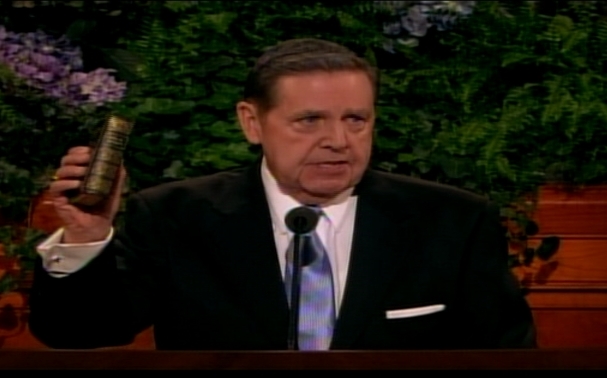
In Jeffrey R. Holland’s BYU devotional address titled “Of Souls, Symbols, and Sacraments”, the language is incredibly eloquent.  Jeffrey R. Holland is my favorite speaker out of all of the apostles, and this devotional address is yet another reason why.

The message that Elder Holland gives in this address is incredible in and of itself, but the way he gives it is what really makes it special.  Elder Holland truly speaks from the heart, which is where I believe a good portion of the power of his speeches comes from.  When someone is truly sincere and speaks with such conviction, it is hard to ignore the message that he/she is giving.  It also helps support the truthfulness of the message, because usually people are very sincere about the truth, or at least about what they perceive to be the truth.

However, I wanted to mostly focus on how Elder Holland “ornaments” his speeches using powerful language.  Elder Holland uses some of the most powerful words and phrases available in the English language to teach even some of the most basic (and yet still very important) doctrines.  He uses words such as “devastated”, “merely sensational”, and “carelessness” to convey intense messages about his topic.  One of the phrases Elder Holland begins with is “If I am not careful and you are not supportive, this subject can slide quickly from the sacred into the merely sensational, and I would be devastated if that happened.”  The choice of words there conveys his meaning perfectly, and really grabs the attention of the listener or reader.

Elder Holland could have just given a simple speech about the Law of Chastity and why one should obey it.  Teaching in such a way can be alright, but it is not nearly as effective or lasting.  When one uses words and phrases and sincerity that are combined together in such an incredible way as Elder Holland did in this devotional address, the important messages are remembered and internalized much more efficiently.

I, for one, can often remember with much more clarity the doctrines and principles taught by Elder Holland very easily, and they have really meant a lot to me.  However, I have heard plenty of speeches from others that have failed to do the same, and I have mostly forgotten them.  I believe this is due to the incredible way that Elder Holland “ornaments” his speeches.

Friday, September 26, 2014

How Mormon Inserts Small Teachings

1. Form Analyzed

I decided to look at language and the specific words that Mormon uses to grab the reader’s attention and make a point (or to teach a principle).

2. Passage Analyzed

I analyzed verses 34-36 of my assigned section (Helaman 6: 34-36).

3. Annotated Text

 34 And thus we see that the Nephites did begin to dwindle in unbelief, and grow in wickedness and abominations, while the Lamanites began to grow exceedingly in the knowledge of their God; yea, they did begin to keep his statutes and commandments, and to walk in truth and uprightness before him.

 35 And thus we see that the Spirit of the Lord began to withdrawfrom the Nephites, because of the wickedness and the hardness of their hearts.

 36 And thus we see that the Lord began to pour out his Spiritupon the Lamanites, because of their easiness and willingness to believe in his words.

4. Breakdown / Listing of things found:

- “And thus we see” – A commonly used phrase
- Plenty of unique and intriguing words
- Language that distinguishes very well between good and evil

5. Interpretation

The diction of Mormon in this section is very formal, and very well thought out.  Mormon is intentionally writing in such a way so as to bring the reader to a Gospel discussion.

To be more specific, Mormon uses the phrase “And thus we see…” often throughout the Book of Mormon, and it is a perfect and well thought out way to tell the reader “Hey, I want to teach you something important so listen up.”  Mormon does a fantastic job of using this phrase throughout the Book of Mormon to let the reader know an important principle, and then, in between each use of this phrase, Mormon eloquently teaches the reader what he wants to teach him or her.  Mormon then uses another phrase, which in this case and I think in most cases is “And it came to pass…” to go back to telling the story.

6. Connections / Questions

I noticed in Savannah K’s post titled “Zeezrom’s Pain” that Savannah wrote about the descriptive diction of that section.  I think Mormon used the approach I mentioned above throughout his narration of the Book of Mormon.

I wonder if there are other phrases that I missed that Mormon uses frequently in the Book of Mormon?